Crime & Law
Opening Statements Conclude, Testimony Begins in Ex-House Speaker Michael Madigan’s Historic Corruption Trial
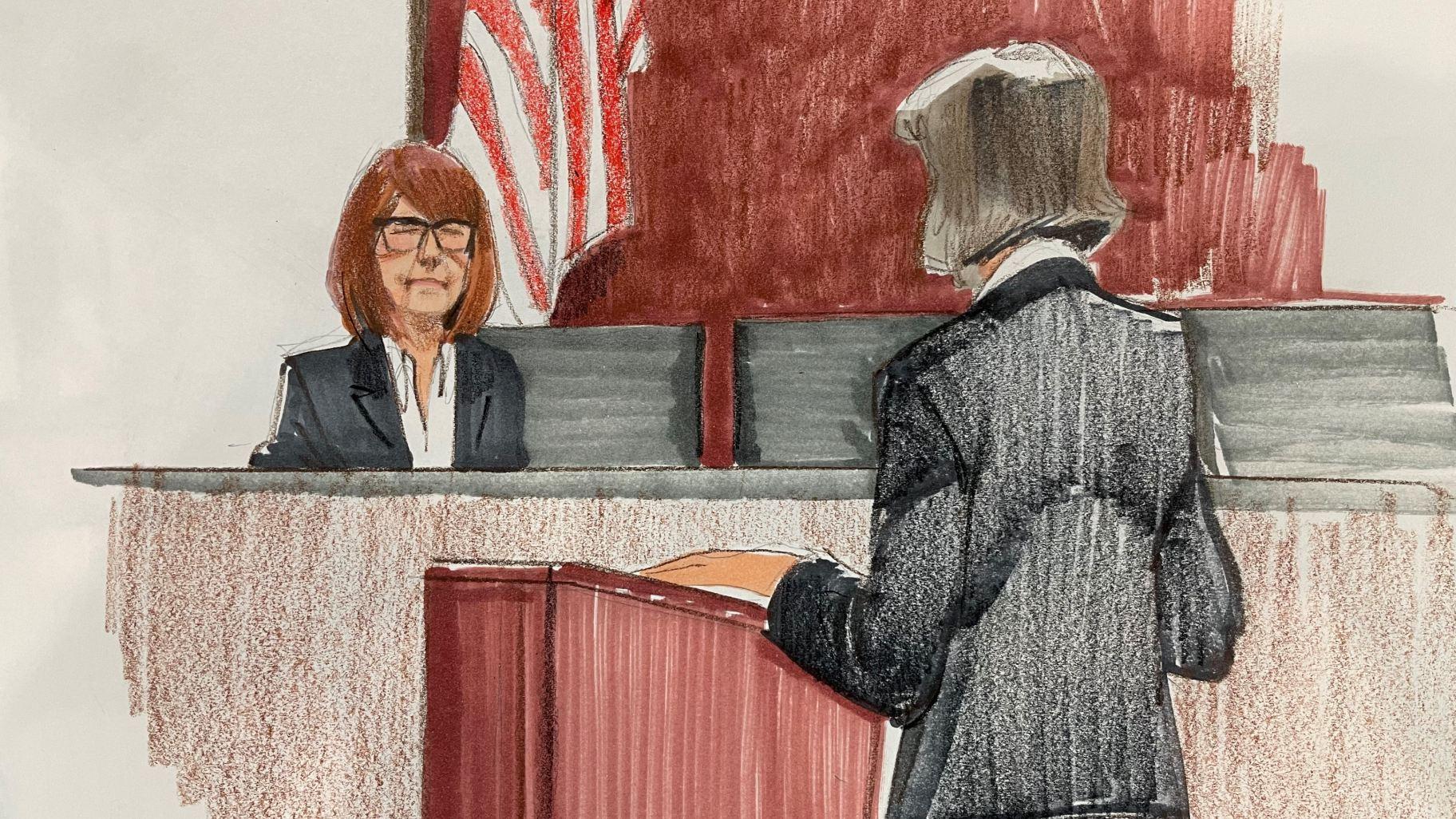 Former state Rep. Carol Sente was the first government witness called in the trial on Oct. 22, 2024. (Illustration by Cheryl Cook)
What’s the difference between a favor and a bribe? That’s what attorneys for Michael McClain say is at the heart of his racketeering and corruption trial alongside his longtime friend, ex-Illinois House Speaker Michael Madigan.
Tuesday marked the second day of opening statements in the landmark trial as McClain’s defense team had its opportunity to present its opening statements to jurors inside the Dirksen Federal Building.
Prosecutors and Madigan’s attorneys presented their own openings Monday after jury selection was finalized.
Both Madigan, 82, and McClain, 77, face charges of racketeering, bribery and wire fraud. They have each pleaded not guilty.
McClain, a former Illinois state representative and longtime lobbyist, did nothing more than “100% legal favors” for Madigan, his attorneys said, in an effort to build trust and maintain his access to the House speaker.
“That’s not bribery,” McClain defense attorney John Mitchell told jurors Tuesday morning. “That’s building a relationship.”
Mitchell described McClain as something of a salesman who needed to secure access to powerful individuals like Madigan in order to succeed as a lobbyist.
But unlike bribery — which Mitchell said is akin to trading an envelope full of cash to secure a vote in the state legislature — lobbying requires a “personal touch” in order to get meetings and establish credibility.
That’s what McClain worked to do for Madigan, Mitchell said: “legal favors.”
“Hope versus an exchange,” Mitchell said. “That’s the difference between lobbying, which is 100% legal, and an illegal bribe. And that’s what this case is all about.”
Assistant U.S. Attorney Sarah Streicker on Monday described McClain as Madigan’s “mouthpiece,” saying he was the speaker’s go-between who helped disguise Madigan’s involvement in an alleged “campaign of bribery” that lasted more than eight years.
According to Streicker, McClain referred to himself as Madigan’s “soldier and surrogate” and he relished his role carrying out his longtime friend’s “dirty work.”
McClain is alleged to have been involved in a trio of bribery schemes outlined by the government in this case involving: a Chinatown land parcel transfer, Commonwealth Edison and the AT&T Illinois. Madigan alone is also accused of two more schemes unrelated to McClain.
In the ComEd allegations, Madigan and McClain are accused of arranging subcontractor jobs for several of the former speaker’s associates with the utility giant, which paid out more than $1 million to those individuals even as they did little or no work.
One of those associates, ex-13th Ward precinct captain Ed Moody, previously testified that although he did receive a ComEd paycheck, he did minimal work for the company and believed he was actually being paid to continue working as a political operative on Madigan-connected campaigns.
ComEd allegedly did this in order to win Madigan’s approval on legislation favorable to the company in Springfield. McClain, who worked as a lobbyist and consultant for ComEd, made job recommendations to the company which came from Madigan, prosecutors said.
But according to Mitchell, there’s no evidence those recommendations were traded for official action from Madigan. He called this a “giant hole” in the government’s case.
“It can’t just be that there were job recommendations and there was legislation,” he said. “Those two things have to be exchanged for each other.”
Mitchell said it wasn’t McClain’s job to supervise the people ComEd hired and if they didn’t do any work, that wasn’t his fault. He compared the situation to writing a college recommendation letter for a friend’s child and then finding out years later that child failed out of school.
Prosecutors have also alleged that between 2017 and 2018, Madigan and McClain worked with AT&T Illinois to solicit bribes from the phone company by arranging for AT&T to indirectly pay ex-state Rep. Eddie Acevedo, another Madigan ally, $22,500 as a lobbyist, even though Acevedo did no actual work for the company.
Another scheme outlined by prosecutors involved Madigan and McClain’s alleged efforts to illegally steer business to the speaker’s private property tax law firm amid efforts to develop a state-owned parcel of land in Chinatown into a commercial development.
After opening statements wrapped up Tuesday morning, former state Rep. Carol Sente was the first government witness called Tuesday.
Sente, a Vernon Hills Democrat who served from 2009-2019, was also the first government witness called in last year’s “ComEd Four” trial. She testified about the ins and outs of state politics, how legislation is handled in Springfield and the importance of Madigan’s role in the General Assembly.
Sente told jurors about a predatory lending bill she brought forth in 2011 that she said had strong bipartisan support. But when she discussed the legislation with Madigan, he told her that he didn’t “want to talk about that bill again” and “it’s not moving forward.”
When asked Tuesday what would happen to a bill if it didn’t have Madigan’s support, she replied, “It would not move forward.”
Sente also testified about another bill focused on budgeting transparency she said she’d worked on and was listed as chief sponsor. But later, Madigan’s name appeared as chief sponsor.
When she confronted him about this, he told her if she wanted to remain chief sponsor, she would need to include an amendment proposed by Madigan. Sente said she ultimately agreed to do so, knowing that if she refused Madigan would’ve killed the bill.
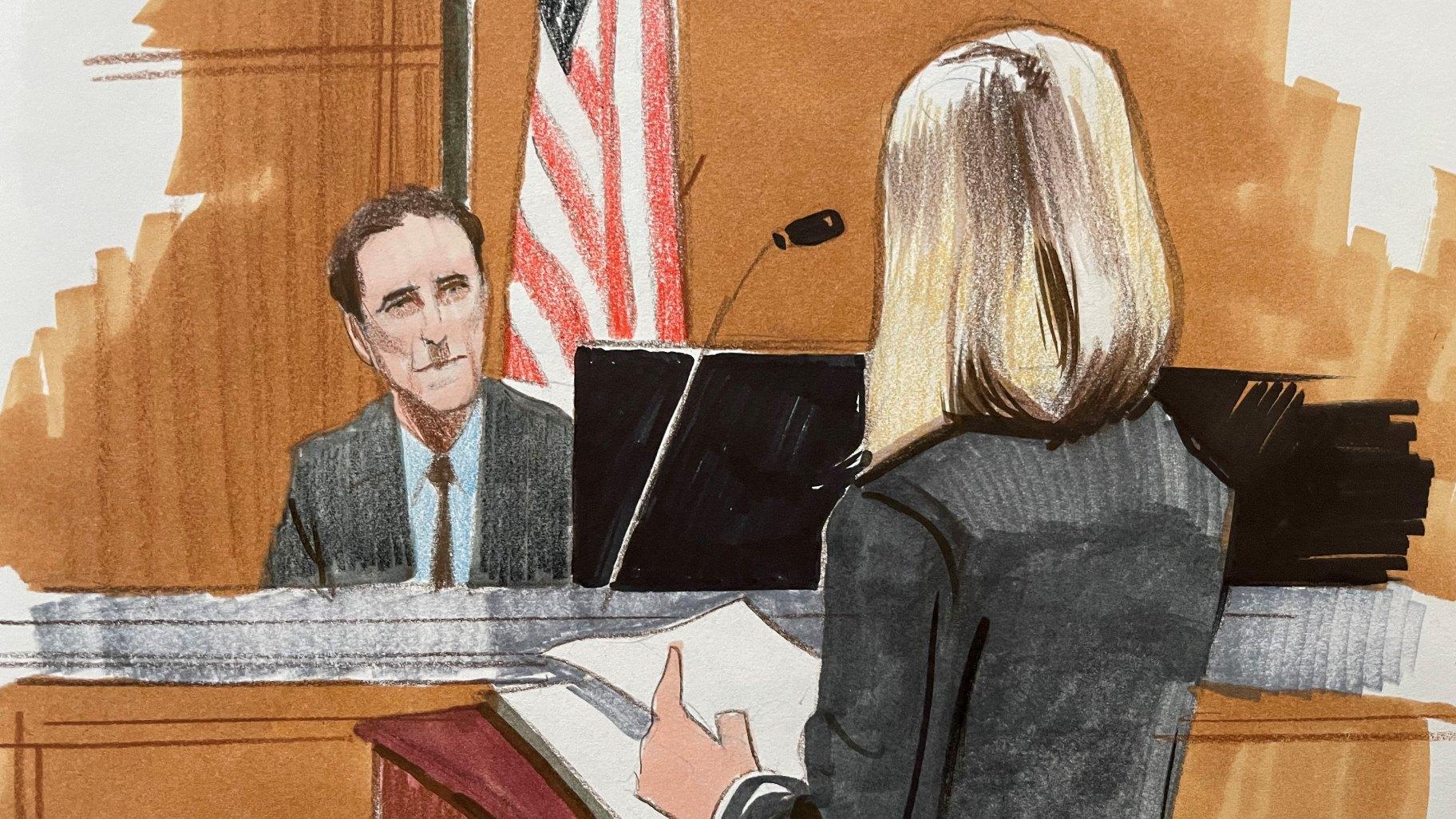 Former state Rep. Scott Drury testifies during the trial of Michael Madigan and Michael McClain on Oct. 22, 2024. (Illustration by Cheryl Cook)
Another former legislator, Scott Drury, testified Tuesday afternoon that while he was in office from 2013 to 2019, Madigan as speaker had “ultimate authority” over deadlines, procedures and legislation within the House of Representatives.
In one instance, a Drury-led bill focused on wrongful convictions had been sent to a committee and he was struggling to get it called for a vote. But after he discussed the legislation during a steakhouse dinner with Madigan, he started to see progress.
While that bill didn’t pass, the changes proposed in that legislation were added to a Senate bill which was later approved.
“I was running into brick walls,” Drury testified, but after meeting with Madigan he said “the bill was green-lighted.”
“There was still some work to do,” he said, “but the bill ultimately did become law.”